
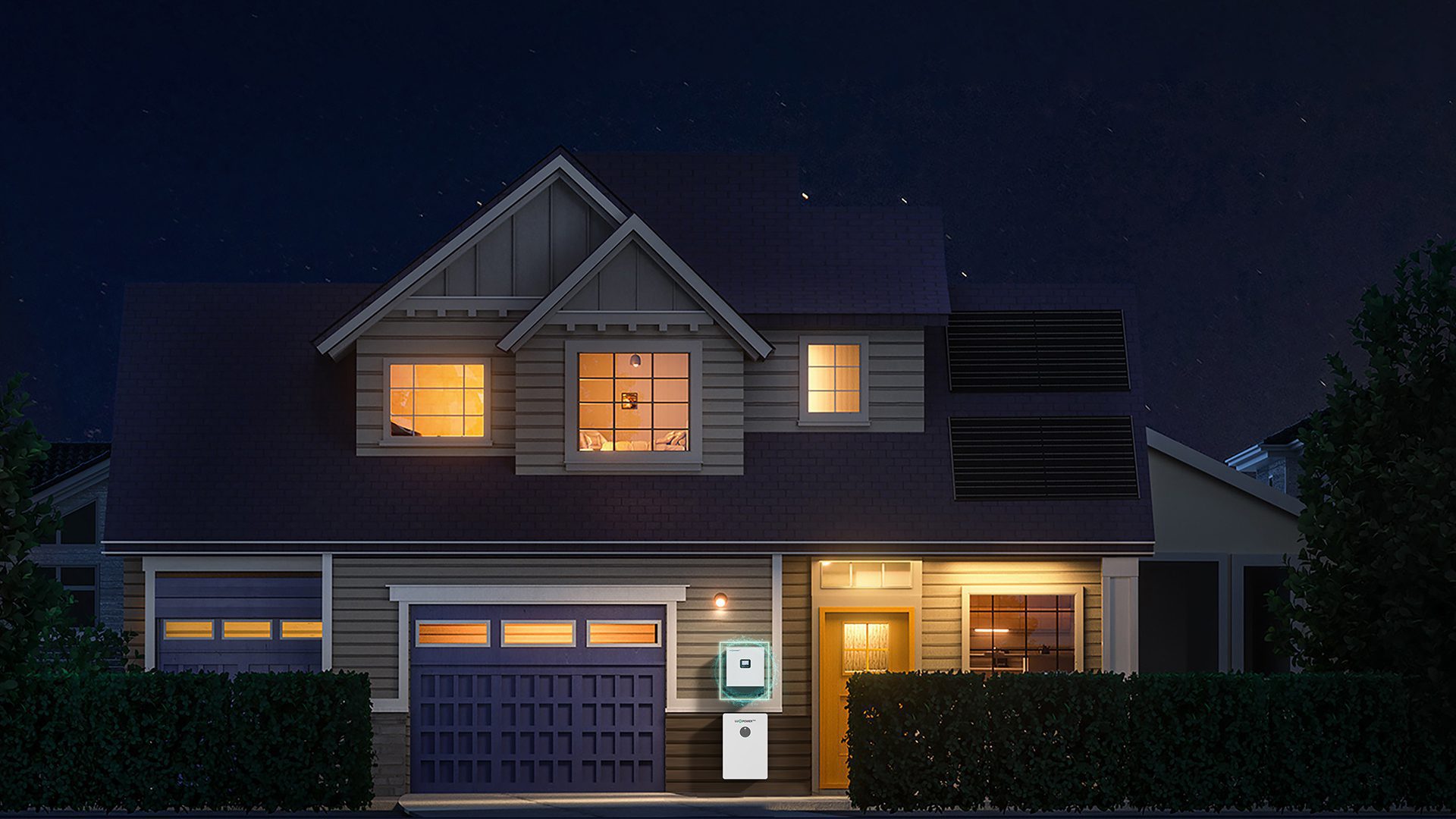
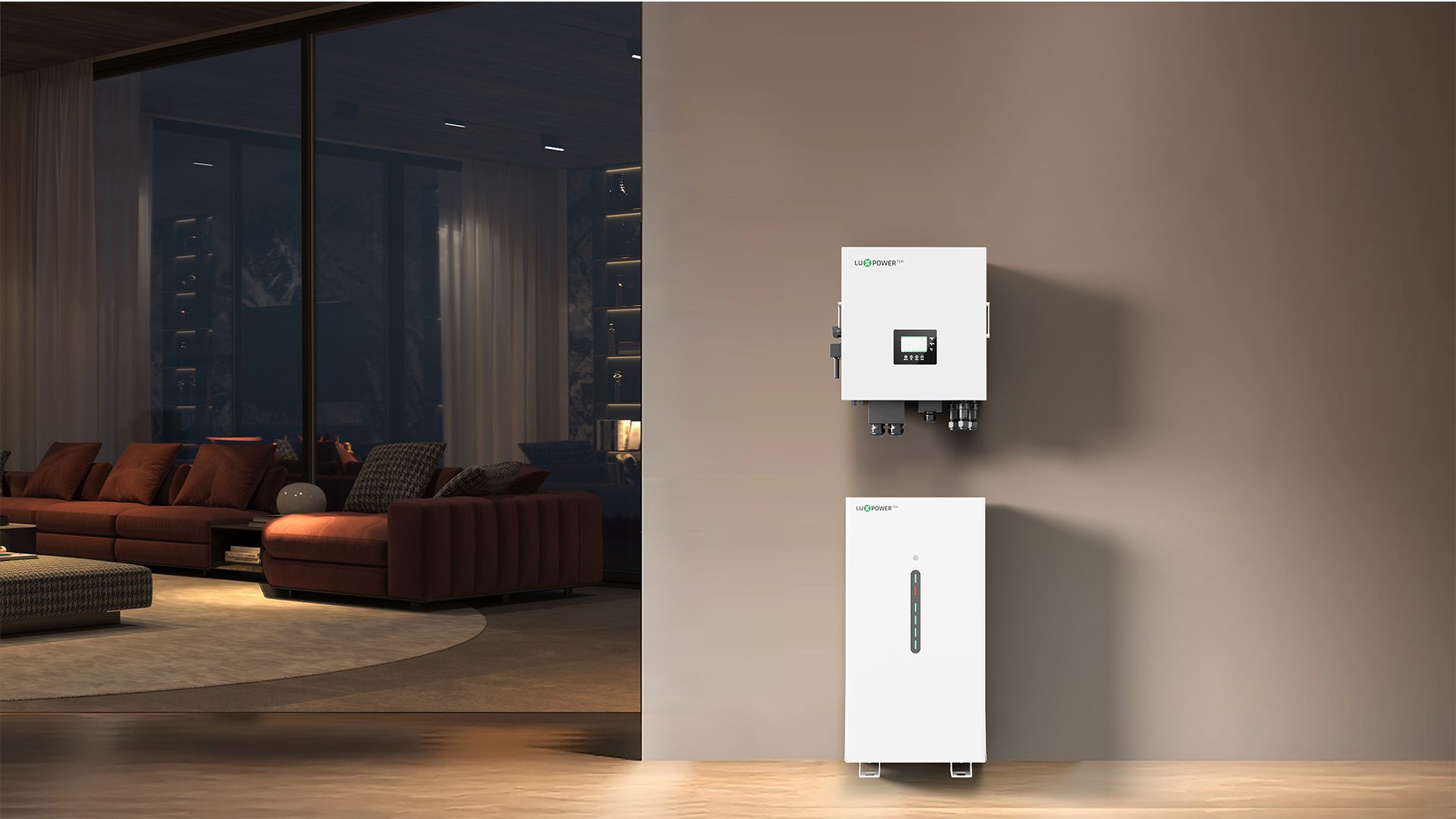
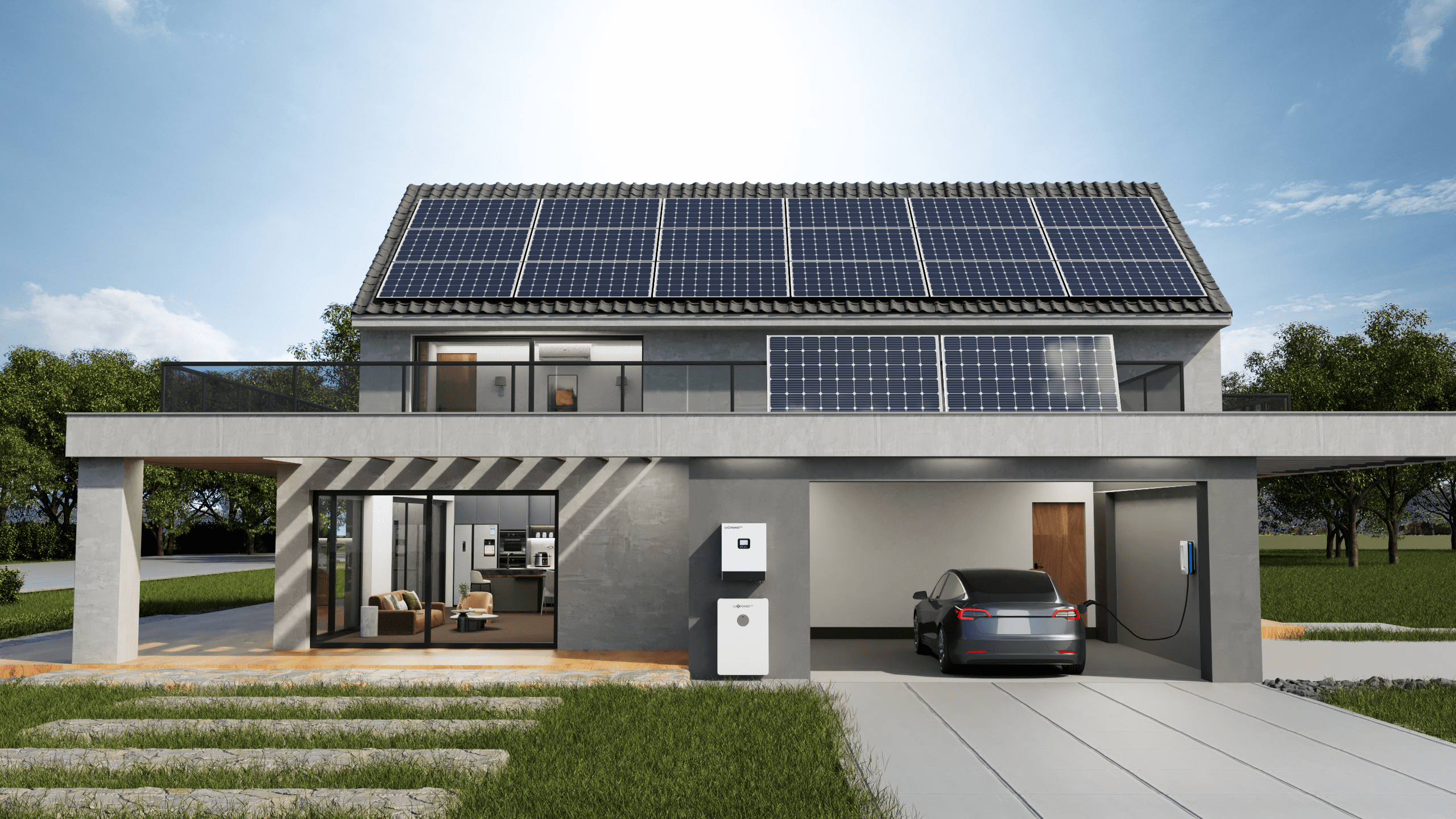




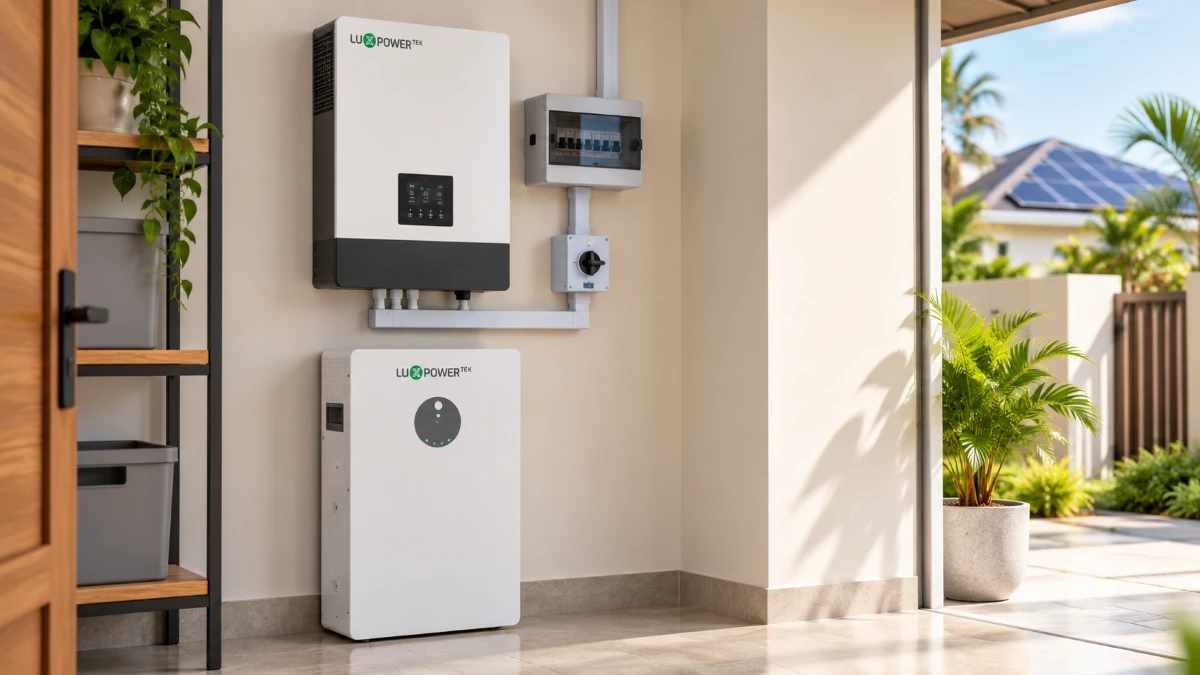
An inverter converts direct current (DC) from a battery or solar array into alternating current (AC) for household appliances. It does not store electricity; the battery stores energy, while solar panels, the grid, or a generator provide charging power. In a home backup system, the inverter also directs energy, charges the battery, and transfers selected circuits to backup supply when the grid fails. At LuxpowerTek Nigeria, we therefore treat inverter selection as a system decision—not simply a choice between 3 kW, 5 kW, or 10 kW models.
When we explain what an inverter is, we begin by separating the jobs performed by each part of the system. Household circuits use AC electricity. Batteries and solar modules work on the DC side. The inverter bridges those two sides and manages the movement of energy between them.
|
Component |
Its job in the system |
|---|---|
|
Inverter |
Converts DC into AC and directs energy between sources and loads |
|
Battery |
Stores energy for later use |
|
Solar panels |
Generates DC electricity from sunlight |
|
Grid |
Supplies AC power when service is available |
|
Generator |
Adds another charging or supply source in a compatible design |
This distinction prevents a common sizing error. A larger inverter raises the amount of load that can run at one time, but it does not add stored energy. Inverter output is the width of the power path; battery capacity is the energy available to travel through it.
A Nigerian home may move through several operating modes in one day. When grid power is present, the inverter may serve household loads and charge the battery according to the selected settings. During sunny hours, solar can supply live demand, recharge storage, or do both. When the grid drops, the inverter draws DC energy from the battery and supplies AC power to the circuits chosen for backup.
A generator can remain part of the plan for extended outages, unusually heavy demand, or battery charging when solar production is limited. Our SNA 3–6K supports PV, battery, grid, and compatible generator input. Once generator control is configured, the inverter can signal a compatible generator when utility power is unavailable and the battery SOC or voltage falls to the selected start point. The generator then charges the battery until the configured end condition or charging window is reached.
We use these controls to keep essential circuits supplied, use daytime solar against live demand, preserve an evening battery reserve, and call on the generator according to the chosen SOC, voltage, and schedule.
Many guides place pure sine wave, hybrid, off-grid, single-phase, and all-in-one in one list. We separate them because they answer different questions.
Types by Output Waveform
Waveform describes the shape of the AC electricity leaving the inverter.
A square-wave inverter changes voltage in abrupt blocks. It is poorly matched to the mix of electronics and motor-driven appliances found in a modern home.
A modified-sine-wave inverter creates a stepped approximation of the utility waveform. Some simple loads may operate on it, but certain motors, transformers, audio devices, chargers, and control circuits may run noisily, run hotter, or behave unpredictably.
Pure sine wave output follows a smooth alternating pattern that matches the waveform appliances are designed for. Every LuxpowerTek residential inverter delivers pure sine wave output — the SNA 3–6K, for example, is specified with THDV below 3%, well inside the threshold for pure sine wave. Waveform quality still leaves separate questions about continuous capacity, startup surge, and battery runtime.
Types by Operating Role
Operating role describes how the inverter works with energy sources.
A grid-tied inverter converts solar power for use with an active utility connection. By itself, it is not a battery-backup system. An off-grid inverter is built around battery-backed operation. Our SNA 3–6K is an off-grid range with hybrid functionality built around a 48 V battery platform.
A hybrid inverter coordinates solar, battery, and grid operation and may also include a generator connection. Our GEN2-LB-EU 3–6K is a single-phase hybrid range with 3–6 kW output options, dual MPPT, up to 9.6 kW PV input on the largest model, and LuxCloud monitoring.
Pure sine wave describes AC output quality; hybrid describes how the inverter coordinates energy sources. The same unit can carry both labels.
Types by System Architecture
Architecture covers the physical and electrical layout: single-phase or three-phase supply, low-voltage or high-voltage batteries, and separate or integrated equipment.
All-in-one belongs here as a product architecture. Our Eco Beast 6000 combines a built-in SNA 6K inverter, monitoring, and 5.12 kWh battery modules in one enclosure, with 5, 10, or 15 kWh configurations. For three-phase requirements, TriP2-LB works with low-voltage batteries, while TriP2-HB supports high-voltage storage from 100 to 700 V.
A product can therefore be sine wave, hybrid, single-phase, and low-voltage at the same time.
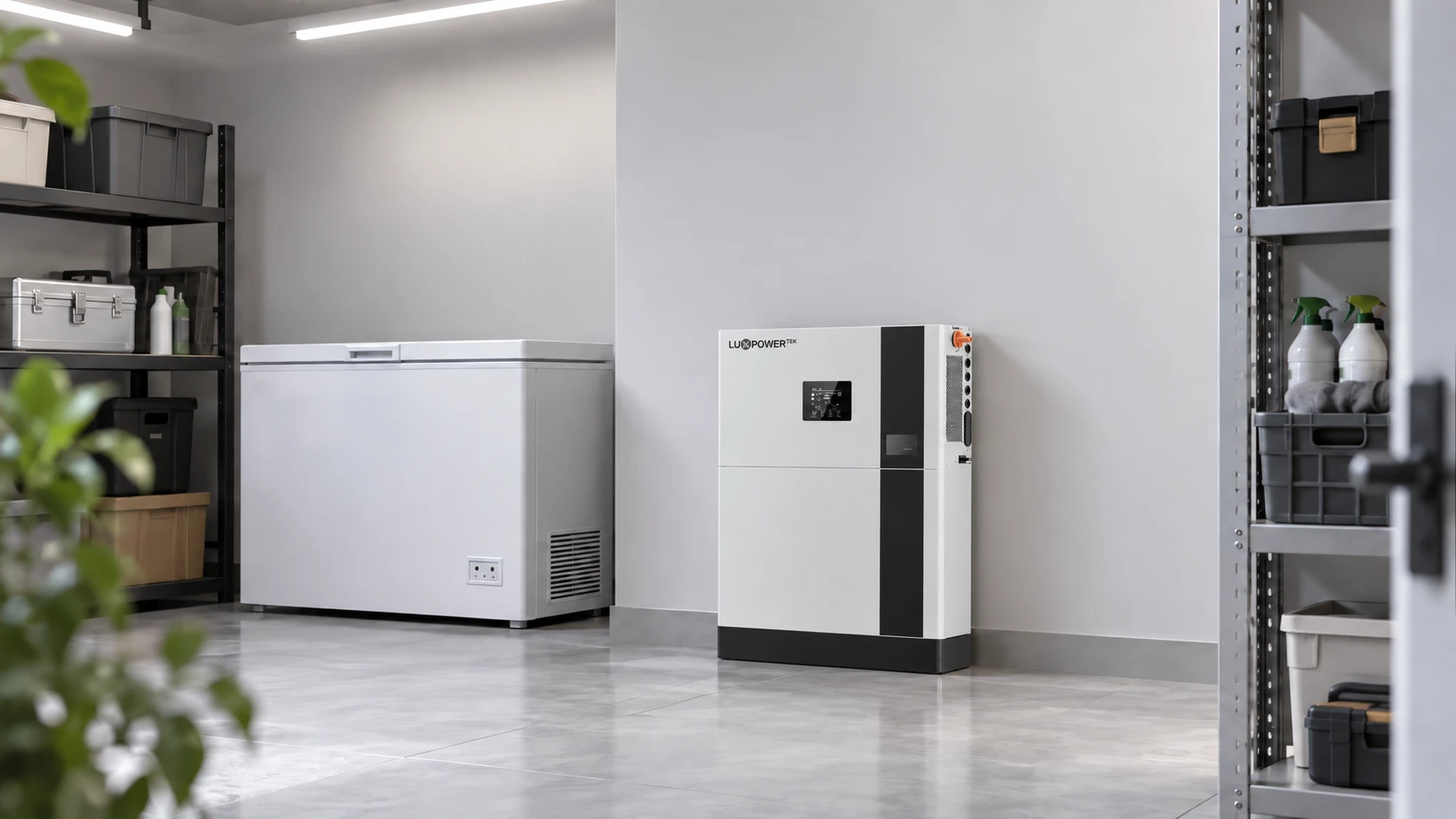
When we review household loads, we never stop at the phrase “pure sine wave.” We look at the appliance and the way it starts.
In a Nigerian home during an evening outage, lighting, a router, and a television mainly test continuous output, while a refrigerator or chest freezer may restart as a split air conditioner is already running. The freezer and air conditioner are inductive compressor loads, so their startup demand can rise well above normal running power. Pure sine wave output provides the smooth AC waveform their motors and electronic controls are designed to use, while the inverter surge rating and battery discharge current still need to cover the startup event.
The SNA 3–6K specification also lists surge power of twice rated output for less than five seconds, with transfer timing below 10 ms for a single inverter and below 20 ms in parallel operation. For another series, we start again with its own datasheet.
Clean output helps the appliance receive the waveform it expects. The inverter still needs enough continuous and surge capacity, while the battery must supply the required current.
We use three separate checks when sizing a residential system.
First, inverter power in kW sets the ceiling for loads operating together. The useful figure is not every appliance in the building added together, but the highest realistic combination on the backup circuits. We then account for the starting behaviour of compressors and motors.
Second, battery energy in kWh indicates how much electricity is stored. A 5 kW inverter paired with a 5 kWh battery does not create a five-hour system. At a constant 5 kW load, the arithmetic gives one hour before battery reserve and conversion losses are deducted. At a lower average load, the same battery lasts longer.
A useful planning equation is:
Estimated runtime = usable battery energy ÷ average load
Usable energy reflects depth of discharge, reserve settings, conversion losses, temperature, and battery condition. Solar production during an outage may extend runtime; a pump, kettle, iron, or air conditioner can shorten it quickly.
Third, we check power delivery and communication. Our PGEM PRO shows why kWh cannot stand alone: its specification lists 14.3 kWh rated energy, 51.2 V, 90% depth of discharge, 140 A maximum continuous charge and discharge current, and CAN/RS485 communication. The inverter, BMS protocol, current limit, firmware, cabling, and protection design have to operate as one system.
Our published installations cover three distinct system scales. A compact home project pairs one SNA 6K inverter with one PGEM 5.12 kWh lithium battery. For a similar home, we would begin by separating essential circuits from discretionary loads and calculating the highest overlap between lighting, fans, refrigeration, internet equipment, and other selected loads.
An expandable residential project combines one SNA-EU 12K inverter, two PGEM PRO 14.3 kWh batteries, and 11.52 kWp of PV. At this scale, the design conversation moves toward peak household demand, the required overnight reserve, and how quickly the solar array should restore the battery after an outage.
Our high-capacity home installation uses two SNA 12K inverters with four PGEM PRO 14.3 kWh batteries. A project at this level also brings parallel operation, battery current, circuit allocation, and future load growth into the review.
The published records establish the hardware used. For each new home, we turn those reference points into a system design by measuring simultaneous load, startup demand, required backup hours, and daytime energy use.
One common mistake is choosing from a model label before listing the loads that must remain powered. Another is sizing from running watts while leaving out the starting demand of a fridge, freezer, pump, or air conditioner. Buyers may also compare waveform, operating-role, and architecture labels as though they described the same attribute.
Battery matching creates another group of problems. The same nominal voltage does not guarantee the right BMS communication or enough discharge current. A copied package may also miss the new home’s backup priorities, phase arrangement, roof space, or expansion plan.
Installation location matters. Our SNA 3–6K has an IP20 enclosure and belongs indoors or in a properly protected position. A weather-resistant model and an indoor model are not interchangeable simply because their power ratings look similar.
We choose a residential inverter by working from the home backward. Start with the circuits that must remain powered, record nameplate wattage, identify motors and compressors, and estimate the highest realistic simultaneous load. Then set the target backup time and confirm whether the property uses single-phase or three-phase supply.
Finally, verify battery voltage and BMS communication, discharge current, PV input, generator integration, installation conditions, and expansion plans. For a Nigerian installation, confirm applicable electrical and inspection requirements with the Nigerian Electricity Management Services Agency (NEMSA) and a qualified installer.
We invite homeowners to compare these routes in our residential inverter range and bring us a clear list of must-run loads, starting loads, and target backup hours. After commissioning, LuxCloud brings PV, battery, and load data into one dashboard on the web, iOS, and Android. With the customer’s authorization, that operating picture can help the homeowner and installer diagnose performance and support a system built around actual demand rather than a generic package label.
Does an inverter store electricity?
No. The battery stores energy. The inverter converts stored DC energy into AC and manages its delivery to household loads.
Can an inverter work without solar panels?
Yes. A battery-backed system may charge from the grid or a compatible generator. Solar adds a daytime generation source and can reduce the grid or generator charging required.
Is a pure sine wave inverter the same as a hybrid inverter?
No. Pure sine wave refers to the AC output waveform. Hybrid describes an inverter that coordinates sources such as solar, battery, and grid power. A hybrid inverter may also provide sine-wave output.
Can an inverter run a fridge, borehole pump, or air conditioner?
It can when the selected model covers continuous load and starting surge, while the battery supplies the required current and energy. We read the appliance nameplate and startup data before adding any motor-driven load to the backup plan.
How long will an inverter battery last?
Runtime comes from usable battery energy divided by average load. It changes as appliances cycle, people switch equipment on and off, solar production rises or falls, and the battery reaches its reserve setting.
 Download