




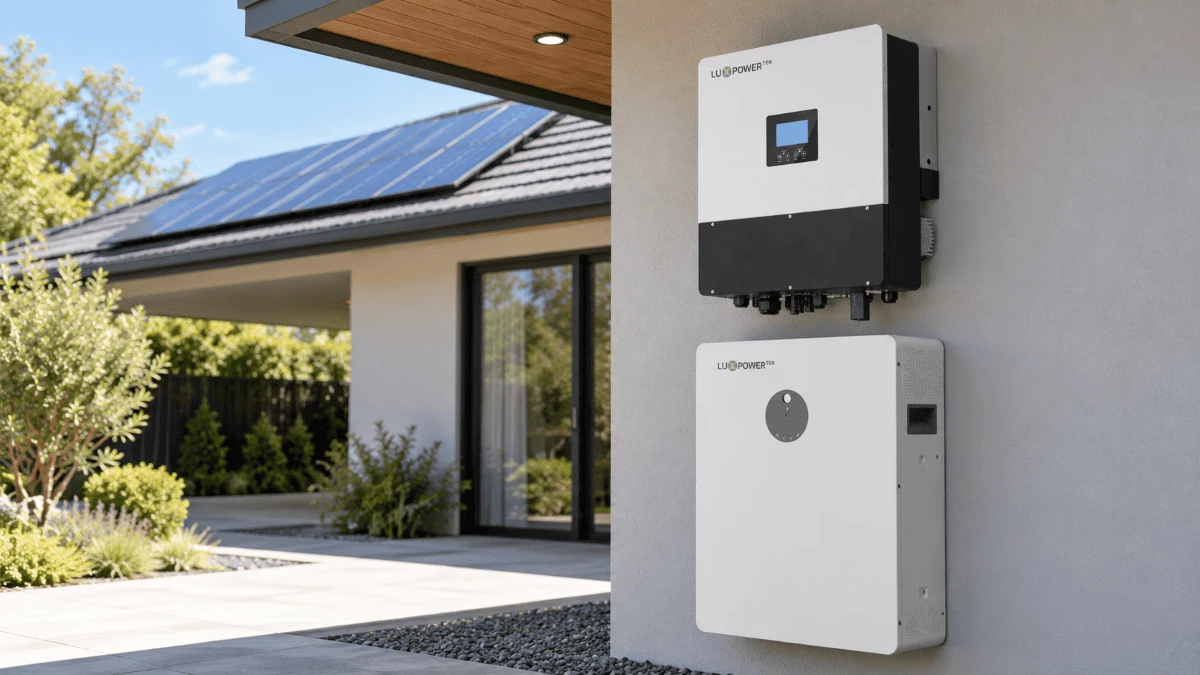
Choosing between an off-grid inverter and a hybrid inverter in Nigeria comes down to two questions: what needs to stay powered when NEPA goes off, and how the battery will recharge before the next outage.
Quick answer: Choose an off-grid inverter when the priority is backing up selected circuits and recharging from solar, mains or a compatible generator. Choose a hybrid inverter when the design needs dedicated grid-connected operation, higher mains passthrough or an IP66 enclosure. Size either solar inverter from the backup loads, required hours and charging sources.
Off-Grid vs Hybrid Inverter: The Practical Difference
Our guide to what an inverter does covers the basic conversion role. For this comparison, the important distinction is that an inverter can use mains electricity to charge a battery, pass it through to connected loads, or operate in parallel with the grid while managing solar and battery power. The last function is grid-interactive operation; mains charging and passthrough also appear in off-grid equipment.
LuxpowerTek classifies SNA 3-6K as an off-grid range. Its current manual documents optional hybrid settings, including PV-and-grid load sharing, CT-based power control and an export setting. In Nigeria, whether hybrid or export operation may be enabled depends on the exact model, approved wiring and applicable DisCo and regulatory requirements. GEN2-LB-EU 3-6K remains the dedicated hybrid range for on-grid and off-grid scenarios. Compare the operating modes, approvals and installation requirements the home will actually use, not the label alone.
|
Household requirement |
SNA off-grid backup plan |
GEN2 hybrid plan |
|---|---|---|
|
Main purpose |
Supply selected circuits during outages |
Coordinate grid-connected operation and outage backup |
|
Mains electricity |
Charging, passthrough and supported PV/grid load sharing |
Charging, passthrough and grid-interactive operation |
|
Generator |
Load supply and charging through a supported connection |
Load supply and charging through a supported connection |
For a home-backup system, compare both options against the same circuits and target backup hours. The available charging sources and installation space then help narrow the choice.
Following a Power Cut Through to the Next Recharge
What stays on when the grid fails?
Picture a family home backing up lights, a router, a fridge, a freezer and ceiling fans. The household may also want to run a borehole pump or one air conditioner. The homeowner identifies which appliances need power and for how long; the installer assesses their combined running load and starting current against the proposed system.
An appliance list also needs a timetable. A pump used briefly in the afternoon creates a different storage requirement from an air conditioner running through the night. The load schedule shows which appliances may run together and how much energy they will use over the intended outage.
PGEM has a nominal voltage of 51.2V and a maximum continuous discharge current of 100A. That gives about 5.1kW DC at nominal voltage, before conversion losses. Actual AC power varies with operating voltage, conversion losses, temperature, state of charge and battery-management-system limits. A single module is not a suitable basis for sustained 6kW AC operation on battery power alone. PGEM PRO is rated at 51.2V with a higher maximum continuous discharge current of 140A.
Two quotations can both specify a 6kW inverter and still offer different battery-backed performance. Moving pump operation into daylight can shift that load towards solar generation when output is sufficient, leaving stored energy for the evening. An appliance-by-appliance calculation provides the basis for choosing the right inverter size.
How does the battery recover before the next outage?
During daylight, solar can supply household loads and recharge storage. Evening mains availability or a compatible generator provides another charging opportunity. A battery selected for a long night also needs enough charging time and input energy to recover.
Household consumption reduces the source power left for charging. A busy daytime household may leave less solar energy for storage than an otherwise similar empty home. Higher charging-current capability helps only when the battery and available source can use it.
Generator integration deserves the same attention. Its output supports both connected loads and charging within the inverter’s input limits. On SNA, automatic starting requires a generator with a compatible remote-start interface, correctly installed control wiring and configured start settings.
A household already using a generator can compare charging while essential loads remain on with reserving more of its output for battery recovery. The proposed charging settings determine how much power remains available to appliances during that period. Stable generator voltage and frequency help the inverter continue accepting that supply.
Two homes, one inverter model, different storage
Two Nigerian installations show why the complete configuration matters. A compact Port Harcourt installation pairs an SNA 6K with a PGEM 5.12kWh battery. This record does not claim that one PGEM sustains 6kW; connected loads and measured backup time were not recorded. The Ajao Estate installation uses the same inverter with a PGEM PRO 14.3kWh battery and twelve 575W panels, totalling 6.9kWp.
The Lagos installation has nearly three times the nominal stored energy. These are equipment records, without measured backup hours. Their practical lesson is clear: keeping the inverter model unchanged still leaves substantial choices about overnight storage and daytime charging. At the same depth of discharge, a larger battery needs more energy to return to its previous charge level.
SNA 6K vs GEN2 6K: Specification Comparison
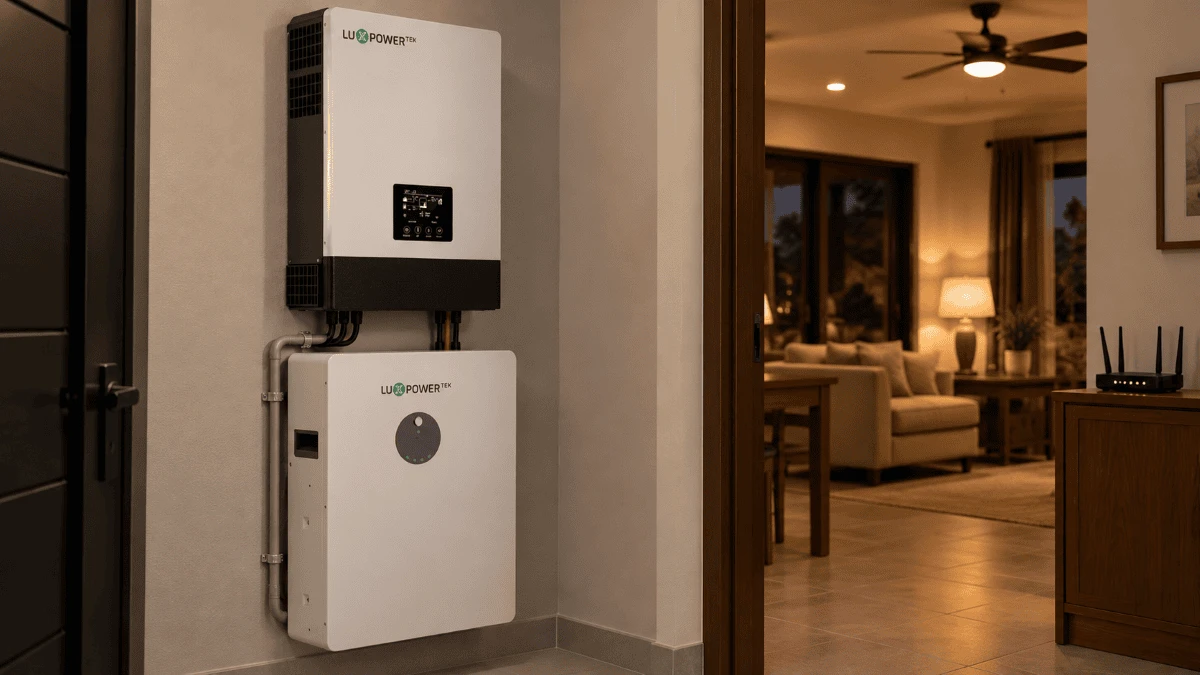
The table compares our SNA 6K and GEN2-LB-EU 6K on the same nominal 48V battery platform.
|
Specification |
SNA 6K |
GEN2-LB-EU 6K |
|---|---|---|
|
Rated backup output |
6kW |
6kW |
|
Maximum PV input power |
9.6kW |
9.6kW |
|
Maximum battery charge / discharge current |
140A / 140A |
125A / 140A |
|
Published surge rating |
2× rated power for 5 seconds |
2× rated power for 0.5 seconds |
|
Maximum continuous AC passthrough |
40A |
52.2A |
|
Rated generator input power |
7,370W |
9,200W |
|
Enclosure protection |
IP20 |
NEMA4X/IP66 |
At the same output rating, the differences in charging current, passthrough and enclosure protection can still change the installation.
Passthrough affects operation while mains is available. GEN2’s higher rating allows more current through the equipment within the installation’s electrical limits, while backup output remains 6kW. The shared 9.6kW figure is the permitted PV-array input; AC output remains 6kW.
Surge figures help assess motor starts. Both specifications list twice-rated-power surge capability, with different stated durations. For a borehole pump or compressor, the installer compares starting current and duration with the inverter, battery and cabling. Starting method and voltage drop also influence the result; surge duration alone cannot establish which model will start a particular motor.
The enclosure affects the mounting decision. SNA needs a dry, ventilated indoor location. GEN2’s IP66 rating provides stronger environmental protection, while its installation instructions still call for shelter from direct sun and rain. Heat, ventilation, flood exposure and maintenance access remain relevant to the chosen position. The extra protection is useful where the site needs it, rather than a reason to replace an otherwise suitable indoor unit.
Which Setup Fits Your Home?
30-Second Guide
|
Main need |
Shortlist |
|---|---|
|
Selected circuits, solar/mains/generator charging and a dry indoor site |
SNA 3-6K shortlist |
|
Dedicated hybrid operation, 52.2A passthrough or an IP66 enclosure |
GEN2-LB-EU 3-6K shortlist |
|
Existing 48V battery bank, PV strings or generator |
Compatibility and connection assessment |
Essential-load backup with mains still available
We recommend keeping SNA on the shortlist when the goal is a protected set of household circuits. It accommodates solar, mains and compatible generator input, so a home can retain its existing electricity connection while using batteries through outages.
A dry indoor mounting space and a workable recharge plan make this a practical option. The household decision is then how much power and stored energy those circuits need. Extra inverter functions offer little value when they solve no identified problem in that arrangement.
Grid-connected operation with a reason to choose GEN2
GEN2-LB-EU suits a plan that uses its on-grid and off-grid operating capabilities. The higher passthrough rating may matter while mains is available, and its enclosure protection may suit the installation better. Those are specific reasons to compare it with SNA at the same output rating.
Daytime solar can reduce grid purchases with either arrangement. A higher electricity tariff increases the value of each purchased unit displaced. Appliances used during sunny hours can take advantage of that generation directly, while charging schedules follow the household’s actual tariff and available supply hours. Both ranges support our LuxCloud monitoring, so remote visibility is a shared feature.
Long outages or an existing system to upgrade
Keeping an older battery bank can reduce replacement work, provided the remaining equipment fits the new design. Battery voltage, current limits and battery-management-system communication determine compatibility. Its remaining usable capacity determines whether it still meets the desired backup hours.
Existing solar strings need to fit the replacement inverter’s PV voltage and current limits. Retaining a generator also affects the connection plan. The SNA GEN port can serve as a generator connection, smart-load connection or AC-coupling connection for an existing solar inverter. These are alternative uses of the same port. A retrofit needing several of them requires a connection layout that accounts for that restriction.
For example, retaining an existing grid-tied solar inverter through AC coupling and keeping a generator are two distinct requirements. Both belong in the initial connection plan. This can change the proposed wiring and equipment, even when the household’s peak demand still fits within the same 6kW output class.
Other installation needs
A three-phase supply calls for a phase-by-phase backup plan; larger loads may need a higher-output system. An all-in-one format changes equipment layout and integration. These are separate design choices from hybrid versus off-grid, and they deserve attention only when the house actually requires them.
Comparing complete quotations
A price comparison means something only when both proposals cover the same backed-up circuits, storage target, solar array and installation work. Protection, monitoring setup, commissioning and service terms belong in that scope too. A lower inverter price can still lead to a more expensive complete system. Solar Inverter Prices in Nigeria provides the detailed cost breakdown.
Off-Grid vs Hybrid Inverter FAQs
Will a hybrid inverter power my house when NEPA is off?
A GEN2 system with sufficient battery energy supplies loads connected to its backup output during an outage. Circuits outside that arrangement remain without backup, so the wiring plan determines which rooms and appliances stay powered.
Does buying a hybrid inverter allow me to sell power to my DisCo?
Not automatically. A hybrid inverter’s export capability and a household’s eligibility for export credits are separate questions. A project seeking credits needs to qualify for the applicable net-billing arrangement and obtain the relevant DisCo and regulatory approvals.
Can I retain a 12V or 24V battery bank?
Neither is a direct match for the nominal 48V platforms compared here. Existing lithium storage also needs compatible operating limits and communication with the replacement inverter.
Can an off-grid inverter still use NEPA or a generator?
Yes. SNA 3-6K accepts grid and compatible generator input for charging and load supply. Wiring, settings and generator quality must suit the installation.
Off-Grid or Hybrid: Which Solar Inverter Should You Choose?
For a solar inverter in a Nigerian home, keep SNA on the shortlist for selected-circuit backup. Consider GEN2 when its dedicated hybrid functions, higher passthrough or IP66 enclosure meet a specific requirement.
For a matched recommendation, send our Nigeria team your appliance list, supply type, existing equipment, location and target backup hours. Our Lagos, Abuja and Port Harcourt teams can arrange an authorised on-site assessment before final configuration.

 Download